
Why Code-Compliant Structural Welding and CWI Inspection Matter for Commercial Projects in Central Virginia
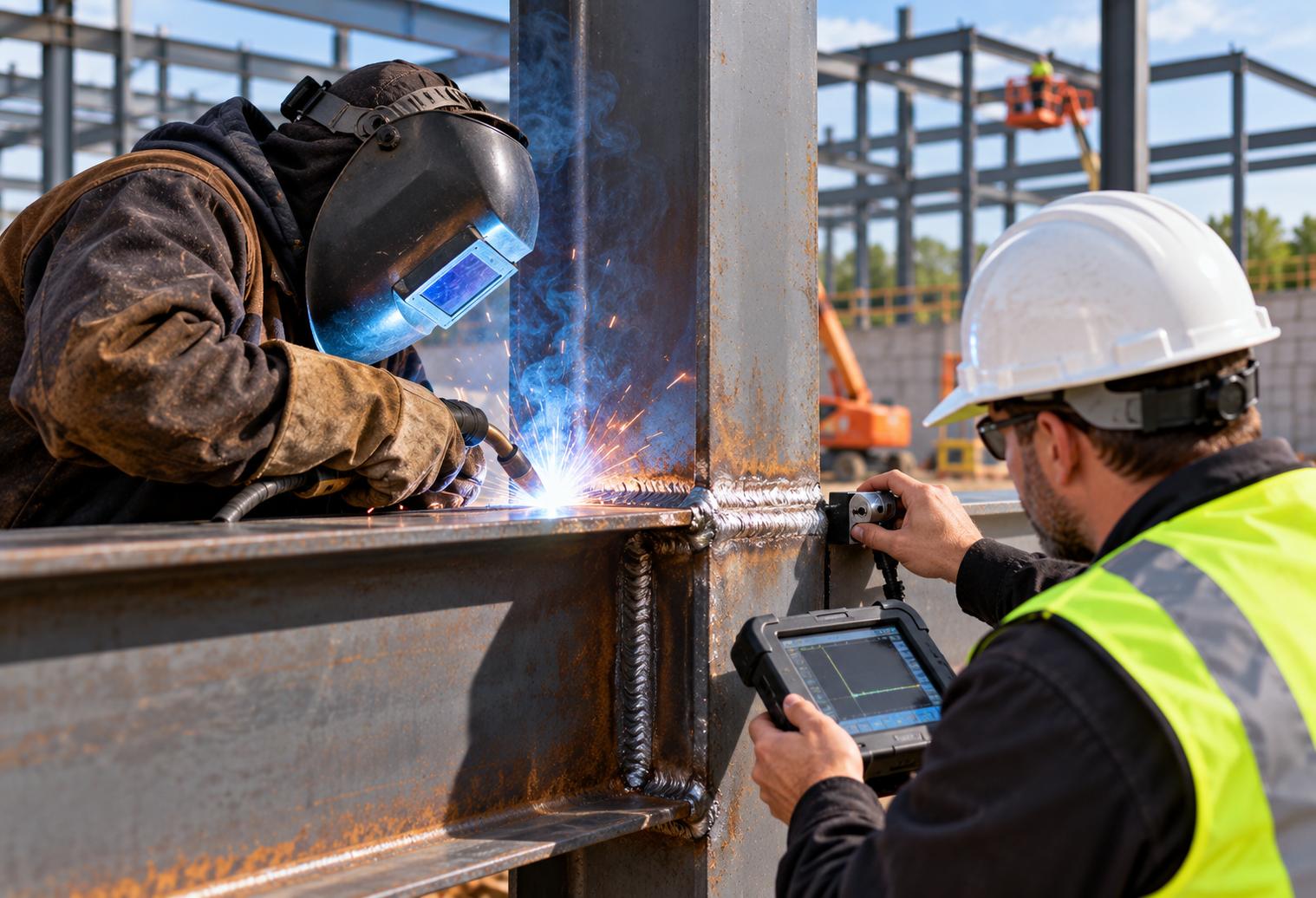
Commercial steel does more than give a building its shape. In warehouses, retail centers, industrial facilities, office buildings, and renovations across Central Virginia, welded connections can be part of the structural system that transfers loads throughout the building.
That is why structural welding cannot be treated like ordinary metal repair. The work must match the project documents, applicable welding requirements, and inspection requirements established for the project.
Quick answer: Code-compliant structural welding helps ensure that welded components are fabricated and installed according to the requirements governing the project. Certified Welding Inspector, or CWI, involvement can add an important layer of verification by checking weld quality, procedures, qualifications, and documentation against specified acceptance criteria. For commercial construction in Central Virginia, those steps can help identify problems before they become costly field corrections, inspection delays, or structural concerns.
What Central Virginia project teams should know
-
Structural weld acceptance is based on the applicable drawings, specifications, codes, standards, and project requirements, not simply on whether a weld looks strong.
-
Virginia’s Uniform Statewide Building Code applies statewide, while local building departments are responsible for code enforcement within their jurisdictions.
-
Commercial projects in Richmond, Henrico County, Chesterfield County, and surrounding communities may involve inspections and documentation at specific stages of construction.
-
A CWI evaluates welding against established acceptance criteria and can review areas such as procedures, welder qualifications, workmanship, and inspection records.
-
Finding a welding issue before steel is enclosed, coated, or loaded is generally easier to address than discovering the same issue later in construction.
Why Does Code-Compliant Structural Welding Matter in Central Virginia?
Code-compliant structural welding matters in Central Virginia because commercial steel connections must perform as the engineer and project documents require while also satisfying applicable construction and inspection requirements. A connection that is incomplete, improperly sized, or welded with an unsuitable procedure can create both quality concerns and project delays.
Virginia uses the Uniform Statewide Building Code, or USBC, for building regulation. The Virginia Department of Housing and Community Development states that the USBC applies to new construction as well as additions, repairs, renovations, and changes of use. Local building inspection departments enforce those requirements. The current 2021 Virginia codes became effective January 18, 2024.
That statewide framework matters for projects throughout the Richmond area and communities such as Henrico, Chesterfield, Hanover, and Goochland. The specific requirements for any job still depend on the adopted code, approved drawings, specifications, structural design, and requirements established by the authority having jurisdiction.
Lowdrag works in a field where those details matter. For any commercial welding scope, we believe the starting point should be the project’s actual requirements rather than assumptions about what was acceptable on a previous job.
What Does a CWI Check on a Structural Welding Project?
A Certified Welding Inspector checks whether welding work conforms to the applicable acceptance criteria, including requirements involving procedures, materials, workmanship, qualifications, weld dimensions, and documentation. The inspector’s exact responsibilities depend on the project documents and the inspection scope.
The American Welding Society describes welding inspectors as professionals who evaluate welds and welding processes for compliance with specified codes, standards, and specifications. Typical responsibilities can include examining completed welds, reviewing Welding Procedure Specifications, checking qualifications, using inspection tools, and documenting results.
For a Central Virginia commercial project, this creates a documented quality-control checkpoint between welding activity and final acceptance.
A CWI is not a substitute for the structural engineer, building official, or other required special inspector. The role should be understood according to the project’s specifications and inspection plan.
Where Do Welding Problems Create the Most Impact Locally?
Welding problems create the greatest project impact when they affect critical connections, trigger corrective work, or are discovered after other construction activities have already progressed. On an active Central Virginia commercial site, a relatively localized steel issue can interfere with several downstream trades.
A rejected or questionable weld may require engineering review, removal and rewelding, additional examination, or documentation before work can continue. If decking, walls, mechanical systems, fireproofing, coatings, or finishes are already being installed nearby, access becomes more difficult.
That makes inspection timing particularly important on projects around Richmond and Charlottesville where general contractors are coordinating multiple trades and tight construction sequences.
Early verification is usually more practical than trying to reconstruct what happened after a connection is concealed.
What Are Warning Signs That a Commercial Welding Scope Needs Closer Review?
A structural welding scope needs closer review when the project requirements, welding procedures, qualifications, inspection responsibilities, or completed weld conditions are unclear. These warning signs do not automatically mean the work is defective, but they are reasons to verify compliance before proceeding.
Watch for:
-
Welding is underway without clear access to the approved structural drawings or specifications.
-
The applicable Welding Procedure Specification cannot be identified.
-
Welder qualification records requested by the project team are unavailable or incomplete.
-
Weld sizes or lengths appear inconsistent with the drawings.
-
Visible cracking, undercut, incomplete weld profiles, or other questionable conditions are present.
-
Field modifications have been made without clear documentation or engineering direction.
-
Required inspection points were missed before connections became difficult to access.
-
Different parties disagree about which acceptance standard governs the work.
On projects in Albemarle County, Lynchburg, Richmond, or the surrounding Central Virginia region, these issues are best addressed through the project’s formal quality and inspection process rather than through guesswork in the field.
When Should a Commercial Contractor Involve a Welding Professional or CWI?
A welding professional or qualified inspector should be involved before uncertainty about structural welding turns into concealed work, rejected construction, or schedule disruption. Project teams should identify inspection requirements early and coordinate required observations before access disappears.
A superintendent or project manager can monitor whether documentation is present and whether work generally matches the drawings. Determining whether a structural weld satisfies technical acceptance criteria, however, may require qualified inspection personnel.
AWS states that welding inspection requires familiarity with welding processes, procedures, qualifications, materials, testing limitations, drawings, records, and the acceptance requirements of the governing document.
For a commercial project in Henrico County or Chesterfield County, that can mean scheduling inspection before decking, coatings, fireproofing, or architectural assemblies obstruct the connection.
What Commonly Causes Structural Welding Compliance Problems?
Structural welding compliance problems commonly come from mismatched procedures, incomplete documentation, field changes, workmanship issues, or misunderstanding the requirements governing a particular connection. The welding itself is only one part of the compliance process.
One common problem is treating field welding as an improvised solution to a fit-up issue. If fabricated steel does not align as expected, adding weld metal or modifying a connection is not automatically an acceptable correction.
Another issue is documentation. The right weld performed without the records required by the project can still create an acceptance problem.
Site conditions also matter. Central Virginia construction can involve outdoor steel erection through summer heat, humidity, rain, and colder winter periods. Environmental conditions and material condition must be managed according to the welding procedure and applicable requirements rather than handled by assumption.
How Can Project Teams Prevent Welding Problems?
Project teams can prevent many structural welding problems by confirming requirements before welding begins and coordinating inspection before completed work becomes inaccessible. A small amount of preparation can reduce uncertainty later in the construction schedule.
Before welding starts, confirm the current drawings, specifications, applicable welding procedures, required qualifications, and inspection points. Field personnel should also know how changes or discrepancies are supposed to be escalated.
During the work, keep required documentation organized and make connections available for inspection when needed.
After welding, complete required inspections and corrective work before surrounding construction limits access.
For projects from Goochland and Hanover to the greater Richmond area, this process is especially valuable when steel erection must stay coordinated with decking, roofing, mechanical work, and building-envelope activities.
What Results Should Contractors Expect From Proper Welding Inspection?
Proper welding inspection should provide a clearer record of whether the inspected work satisfies the specified acceptance criteria and identify conditions requiring correction or additional evaluation. It does not guarantee that every future structural issue is impossible.
A useful inspection process gives the project team actionable information. Accepted work can move forward according to the project process, while questionable conditions can be addressed through the appropriate contractor, inspector, engineer, or authority.
Good documentation also creates traceability. That can be valuable when a general contractor, owner, engineer, or building official needs confirmation of what was inspected and how an issue was resolved.
What Mistakes Should Central Virginia Contractors Avoid?
Central Virginia contractors should avoid treating structural welding as ordinary field fabrication when the work is governed by engineered details, specifications, and inspection requirements. The better approach is to resolve requirements before crews begin altering structural components.
Mistake: Assuming a visually substantial weld is automatically acceptable.
Consequence: Weld appearance alone does not establish compliance.
Better approach: Evaluate the weld against the specified acceptance requirements.
Mistake: Waiting until the end of the project to organize welding records.
Consequence: Missing documentation can become difficult to reconstruct.
Better approach: Maintain required records as the work progresses.
Mistake: Making an undocumented field modification to solve a fit-up problem.
Consequence: The finished connection may no longer match the engineered detail.
Better approach: Route deviations through the project’s approved review process.
Mistake: Scheduling inspection after access is blocked.
Consequence: Verification may require additional access work or construction disruption.
Better approach: Coordinate inspection with the steel erection sequence.
What Is a Common Central Virginia Commercial Welding Scenario?
A common Central Virginia scenario occurs when structural steel requires a field adjustment during erection and the proposed fix involves welding that differs from the original detail. This is a scenario, not a Lowdrag project case study.
Imagine steel erection on a commercial addition outside Richmond. A connection does not fit as expected, and the quickest field solution appears to be adding or relocating a weld.
The safe project response is not simply to make the weld and keep moving. The team should determine whether the modification requires review, confirm the approved repair or revised detail, identify the applicable welding procedure, complete the work using qualified personnel, and perform any required inspection.
That process may feel slower at the moment, but it reduces the risk of discovering an undocumented structural modification later.
What Service Solutions Support Structural Welding Compliance?
Structural welding compliance is supported by coordinated welding, procedure control, qualified personnel, inspection, documentation, and timely correction of nonconforming work. The precise combination needed depends on the contract documents and project scope.
Potential needs can include structural steel welding, field welding, weld inspection, CWI inspection, repair welding, documentation review, and coordination of corrective work.
How Do In-House Checks and Professional Welding Inspection Compare?
In-house project checks help manage workflow, but qualified welding inspection addresses technical acceptance requirements that ordinary construction observations may not cover. The two functions can complement one another rather than compete.
Superintendents can confirm that crews are working at the correct locations, that drawings are available, and that scheduled inspections are not missed. A qualified inspector can focus on technical welding requirements within the assigned inspection scope.
For commercial construction, the right question is not whether every weld needs the same level of inspection. It is what the project’s drawings, specifications, governing requirements, and inspection plan require.
What Central Virginia Areas Can This Guidance Apply To?
This guidance applies broadly to commercial structural welding work throughout Central Virginia, although each jurisdiction and project must be evaluated according to its own documents and requirements. Relevant areas can include Richmond, Henrico County, Chesterfield County, Hanover County, Goochland County, Charlottesville and Albemarle County.
What Can Happen If Welding Compliance Issues Are Ignored?
Ignoring a structural welding compliance issue can increase the chance of rework, inspection delays, engineering review, schedule disruption, and added costs once surrounding construction has progressed. Addressing a question early is usually more manageable than addressing it after access has been lost.
The goal is not to create unnecessary alarm. It is to keep a manageable welding question from becoming a larger project coordination problem.
For Central Virginia contractors working against steel erection milestones and downstream trade schedules, timely verification protects both construction quality and workflow.
FAQ About Structural Welding and CWI Inspection in Central Virginia
Is structural welding regulated on commercial projects in Virginia?
Yes, structural welding can be subject to requirements established by Virginia’s building code framework, project documents, referenced standards, and required inspection provisions. The Virginia USBC governs building construction statewide, while local building departments enforce the code. The exact requirements for a particular weld depend on the project’s approved design and specifications.
What does CWI stand for?
CWI stands for Certified Welding Inspector, a professional certification administered by the American Welding Society. AWS describes CWI qualification and testing as covering welding inspection fundamentals, practical inspection activities, and the ability to work with applicable codes. Certification alone does not replace project-specific authorization or required inspection roles.
Does every structural weld in Richmond require a CWI inspection?
Not necessarily, because inspection requirements depend on the applicable code provisions, project specifications, drawings, inspection plan, and direction of the responsible design and enforcement professionals. Contractors should determine the required inspection scope before welding begins instead of assuming that every connection receives identical inspection.
Who enforces Virginia building-code requirements in Central Virginia?
Local building inspection departments enforce Virginia’s Uniform Statewide Building Code within their jurisdictions. The Virginia Department of Housing and Community Development explains that the state adopts the USBC while enforcement is the responsibility of local government building inspection departments. That structure applies across Central Virginia jurisdictions.
Can a CWI approve a structural design change?
A CWI should not be assumed to have authority to redesign a structural connection simply because the inspector is qualified to evaluate welding. Proposed structural changes should follow the project’s required engineering and approval process. The inspector can then evaluate welding within the scope and acceptance criteria assigned to the inspection.
Why should Chesterfield County contractors schedule weld inspection early?
Early inspection helps Chesterfield County project teams identify welding concerns while connections are still accessible and before downstream trades restrict access. Once decking, coatings, fireproofing, walls, or building systems surround structural steel, correcting or examining a questionable connection can become more disruptive to the construction sequence.
What documents may matter during a structural welding inspection?
Relevant documents can include approved structural drawings, project specifications, Welding Procedure Specifications, qualification records, inspection requirements, and records of approved field changes. The exact documentation depends on the project. Having current documents available helps inspectors evaluate the actual work against the correct requirements.
Is AWS D1.1 relevant to commercial structural steel welding?
AWS D1.1 is a widely recognized structural steel welding code covering areas such as fabrication, qualification, and inspection, but the applicable edition and requirements must be determined from the governing project documents. AWS specifically identifies D1.1 as its Structural Welding Code for steel and offers a specialized CWI endorsement focused on it.
Protect the Next Phase of Your Central Virginia Project
Well-coordinated structural welding and inspection help commercial project teams move forward with greater confidence in the work being documented and evaluated. From Richmond-area construction to projects elsewhere in Central Virginia, addressing welding requirements early can reduce uncertainty when the schedule gets busy.